Home › Plants, Gifts, Toys & More › Gift-tree-watermelon-peperomia
'%3E%3Crect x='0' y='0' width='1024' height='680' fill='%23919867'/%3E%3Cg transform='scale(4.00) translate(0.5 0.5)'%3E%3Cellipse fill='%23141e00' fill-opacity='0.50' cx='144' cy='60' rx='51' ry='51'/%3E%3Cg transform='translate(212.64 161.94) rotate(138.58) scale(147.36 34.79)'%3E%3Cellipse fill='%23ffffff' fill-opacity='0.50' cx='0' cy='0' rx='1' ry='1'/%3E%3C/g%3E%3Cg transform='translate(0.00 22.75) rotate(-44.77) scale(83.47 30.74)'%3E%3Cellipse fill='%23ffffff' fill-opacity='0.50' cx='0' cy='0' rx='1' ry='1'/%3E%3C/g%3E%3Cg transform='translate(0.00 154.61) rotate(221.81) scale(87.13 17.56)'%3E%3Cellipse fill='%23ffffff' fill-opacity='0.50' cx='0' cy='0' rx='1' ry='1'/%3E%3C/g%3E%3Cg transform='translate(65.80 92.93) rotate(307.17) scale(26.74 21.76)'%3E%3Cellipse fill='%23274702' fill-opacity='0.50' cx='0' cy='0' rx='1' ry='1'/%3E%3C/g%3E%3Cg transform='translate(204 15) rotate(64) scale(151 16)'%3E%3Crect fill='%23ffffb0' fill-opacity='0.50' x='-0.5' y='-0.5' width='1' height='1'/%3E%3C/g%3E%3Cg transform='translate(227.08 150.57) rotate(315.98) scale(47.32 28.24)'%3E%3Cellipse fill='%23ffffff' fill-opacity='0.50' cx='0' cy='0' rx='1' ry='1'/%3E%3C/g%3E%3Cg transform='translate(25.04 19.40) rotate(314.88) scale(16.92 49.87)'%3E%3Cellipse fill='%23fffee9' fill-opacity='0.50' cx='0' cy='0' rx='1' ry='1'/%3E%3C/g%3E%3Cellipse fill='%23000000' fill-opacity='0.50' cx='168' cy='78' rx='20' ry='17'/%3E%3Cg transform='translate(237 26) rotate(241) scale(51 31)'%3E%3Crect fill='%23547100' fill-opacity='0.50' x='-0.5' y='-0.5' width='1' height='1'/%3E%3C/g%3E%3C/g%3E%3C/g%3E%3C/svg%3E)

'%3E%3Crect x='0' y='0' width='1024' height='1024' fill='%23a58e91'/%3E%3Cg transform='scale(4.00) translate(0.5 0.5)'%3E%3Cellipse fill='%2336652a' fill-opacity='0.50' cx='78' cy='135' rx='108' ry='82'/%3E%3Cg transform='translate(230.40 128.56) rotate(355.92) scale(55.20 255.00)'%3E%3Cellipse fill='%23fac3e5' fill-opacity='0.50' cx='0' cy='0' rx='1' ry='1'/%3E%3C/g%3E%3Cellipse fill='%23fac4f8' fill-opacity='0.50' cx='181' cy='248' rx='119' ry='41'/%3E%3Cg transform='translate(122.00 17.34) rotate(293.27) scale(44.64 70.78)'%3E%3Cellipse fill='%23ffabda' fill-opacity='0.50' cx='0' cy='0' rx='1' ry='1'/%3E%3C/g%3E%3Cg transform='translate(30.59 156.75) rotate(185.76) scale(38.91 63.45)'%3E%3Cellipse fill='%2355282e' fill-opacity='0.50' cx='0' cy='0' rx='1' ry='1'/%3E%3C/g%3E%3Cellipse fill='%2395d49c' fill-opacity='0.50' cx='97' cy='92' rx='36' ry='36'/%3E%3Cellipse fill='%230b0000' fill-opacity='0.50' cx='162' cy='184' rx='13' ry='18'/%3E%3Cellipse fill='%23a2de9a' fill-opacity='0.50' cx='126' cy='166' rx='27' ry='27'/%3E%3Crect fill='%23000000' fill-opacity='0.50' x='47' y='154' width='49' height='18'/%3E%3Cg transform='translate(185 138) rotate(264) scale(125 24)'%3E%3Crect fill='%236ecc6d' fill-opacity='0.50' x='-0.5' y='-0.5' width='1' height='1'/%3E%3C/g%3E%3C/g%3E%3C/g%3E%3C/svg%3E)
$39.99 AUD
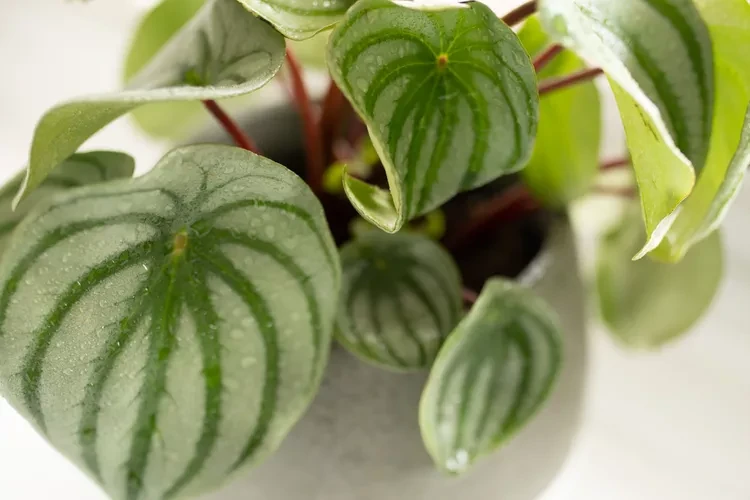
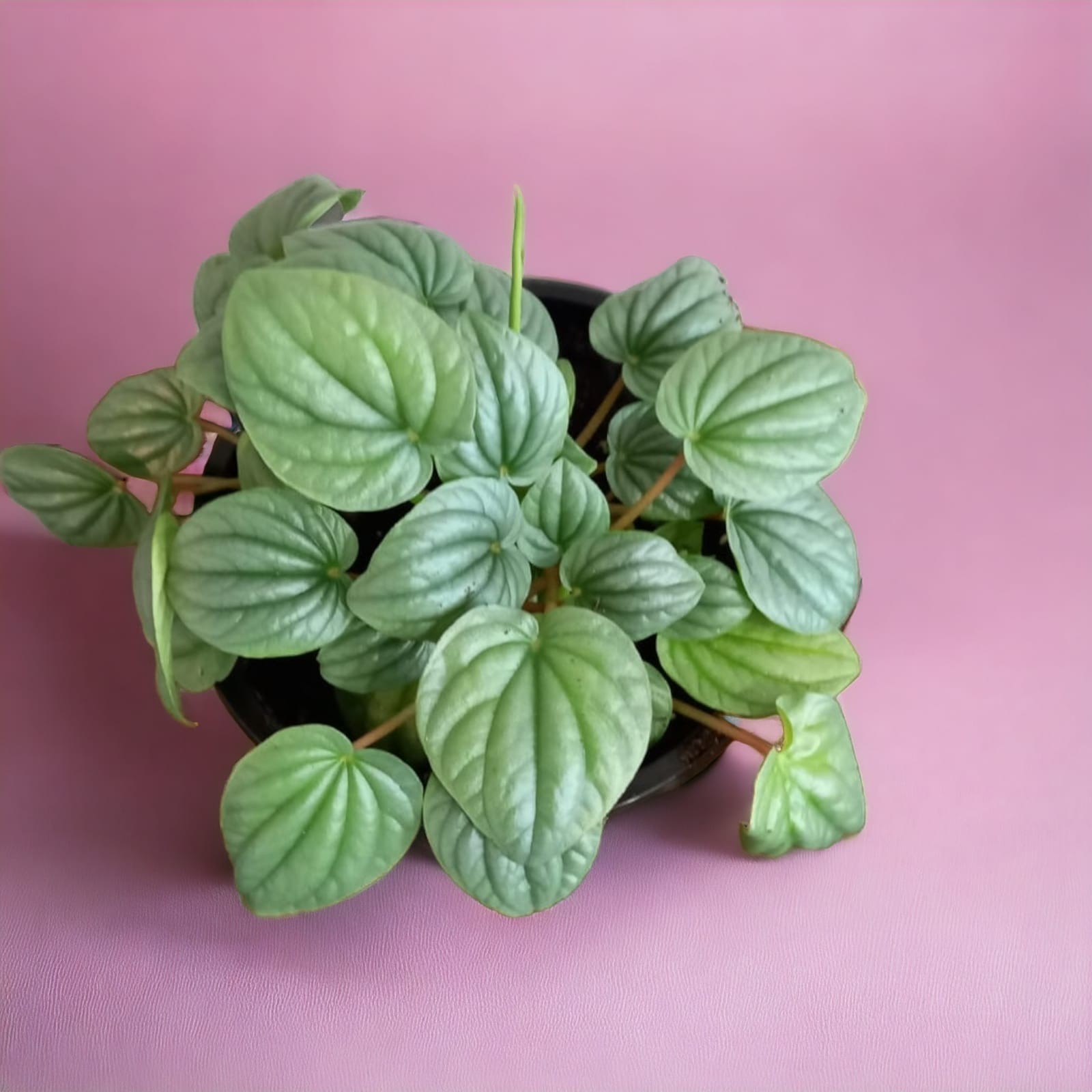
Watermelon Peperomia
$39.99 AUD
Approx $28.19 USD
Description:
| Botanical Name | Pilea argyreia |
| Common Name | Watermelon peperomia, watermelon begonia |
| Family | Piperaceae |
| Plant Type | Perennial |
| Mature Size | 12 in. tall, 8 in./ wide |
| Sun Exposure | Partial |
| Soil Type | Moist but well-drained |
| Soil pH | Acidic |
| Bloom Time | Spring, summer |
| Flower Color | Green |
| Hardiness Zones | 10a, 10b, 11a, 11b, 12a, 12b |
| Native Area | South America |
Growing and caring for Watermelon Peperomia (Peperomia argyreia), a tropical houseplant with stunning foliage, involves following a few essential steps to ensure its health and vibrancy:
Light
- Watermelon Peperomia thrives in bright to medium indirect light. It’s best placed near a window where it receives filtered sunlight. Avoid direct sunlight to prevent leaf burn, but ensure it gets enough light to avoid leggy growth.
Soil
- Use a well-draining potting mix, ideally a one-to-one mixture of peat moss and perlite. This type of soil helps retain some moisture without becoming waterlogged.
Water
- Allow the top couple of inches of soil to dry out between waterings, then water thoroughly. Be careful to avoid both overwatering and underwatering, as Watermelon Peperomia is sensitive to moisture levels.
Temperature and Humidity
- Maintain warm, slightly humid conditions, mimicking the tropical rainforest environment. Keep it away from drafts and ensure household temperatures and humidity levels are consistent.
Fertilizer
- During the spring and summer, fertilize every two to four weeks with a balanced liquid fertilizer to support growth.
Propagation
Watermelon Peperomia can be propagated in two main ways:
- Division: Gently separate offshoots from the main plant and pot them separately, maintaining moist soil until they establish.
- Leaf Cuttings: Cut a leaf in half and plant each half in soil, keeping the conditions lightly moist and indirect light until new growth appears.
Potting and Repotting
- Prefer being slightly pot-bound, so repot only every two to three years or when necessary. Choose a pot only slightly larger than the previous one and refresh the soil during repotting.
Pests and Diseases
- Watch for common pests like fungus gnats, mealybugs, scale, and aphids. Avoid overwatering to prevent root rot.
Common Problems
- Curling Leaves: Often a sign of under-watering or too much direct sunlight.
- Drooping Leaves: Typically indicate the plant needs water.
- Brown Leaves: Could be due to environmental stress, pest damage, lack of humidity, or overwatering.
- Yellow Leaves: Often caused by overwatering or pests.