The Ultimate Guide To Natural Skincare For All Skin Types
Achieving healthy, glowing skin is something we all desire, but knowing the best way to care for your skin can be overwhelming. With the
increasing demand for organic and natural skincare products, it’s important to understand how to create an effective skincare routine
tailored to your skin type. Natural skincare offers a gentle, chemical-free approach that nourishes and maintains the health of your skin
while being eco-friendly and sustainable.
In this comprehensive guide, we'll explore natural skincare routines, the benefits of organic ingredients, and how to identify and care for different skin types. We’ll also cover common skincare mistakes, DIY recipes, and provide product recommendations to help you achieve radiant, healthy skin.
The Benefits of Natural Skincare
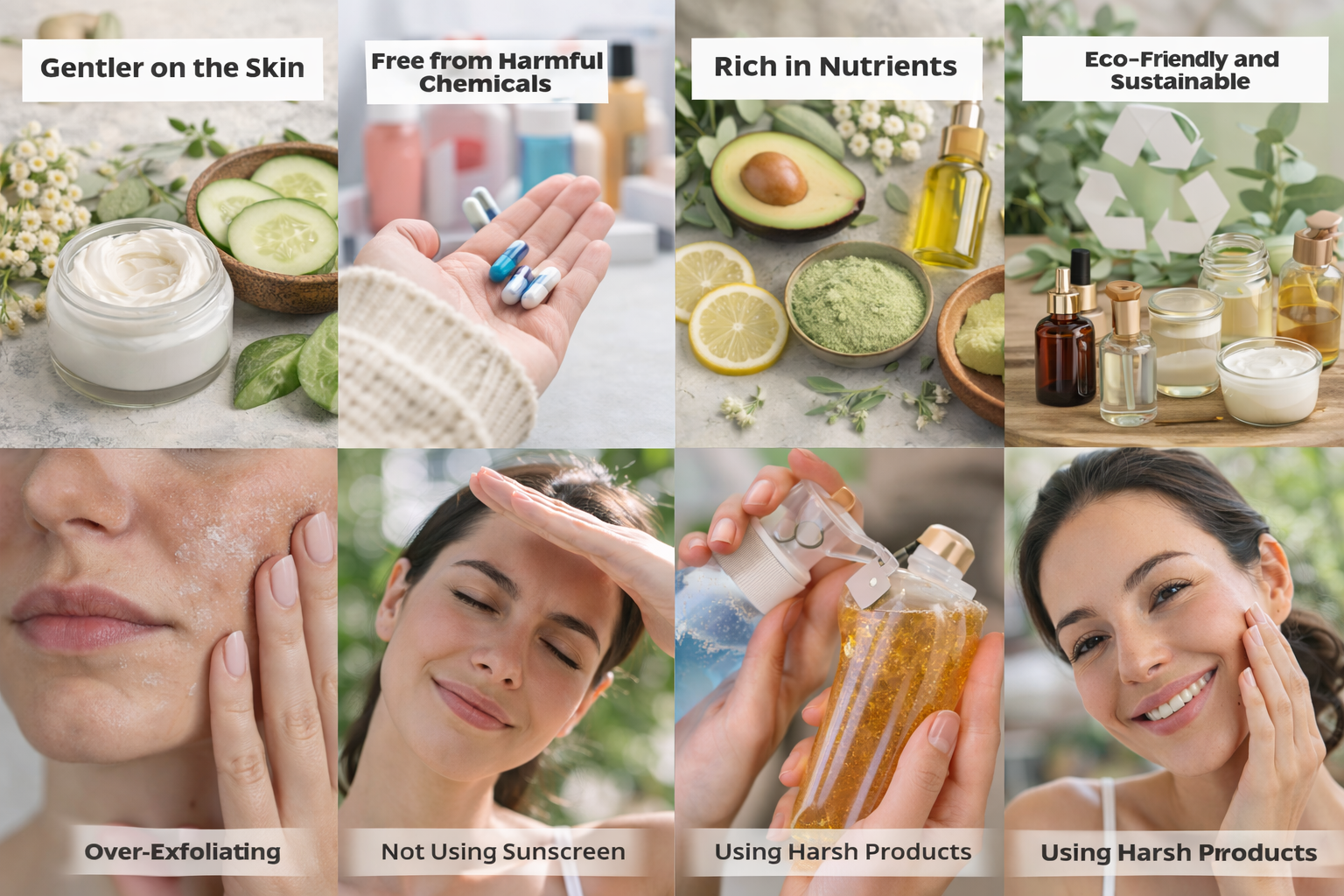
Gentler on the Skin
Natural skincare products are formulated with plant-based ingredients that are less likely to irritate your skin. These products are ideal
for sensitive skin as they don’t contain harsh chemicals, parabens, or synthetic fragrances that could trigger allergic reactions.
Free from Harmful Chemicals
Synthetic chemicals in conventional skincare products can strip your skin of its natural oils, cause imbalances, and contribute to premature
aging. Natural skincare avoids these harmful chemicals and instead utilizes ingredients that are safe and gentle on the skin.
Rich in Nutrients
Natural products are rich in essential vitamins and minerals like vitamin C, E, and A, all of which help nourish the skin and promote a
healthy complexion. These nutrients help to heal, hydrate, and protect the skin from environmental damage.
Eco-Friendly and Sustainable
Using natural ingredients not only benefits your skin but also contributes to environmental sustainability. Many brands focus on
eco-friendly packaging, organic farming practices, and ethical sourcing, which ensures that the products are good for both your skin and the
planet.
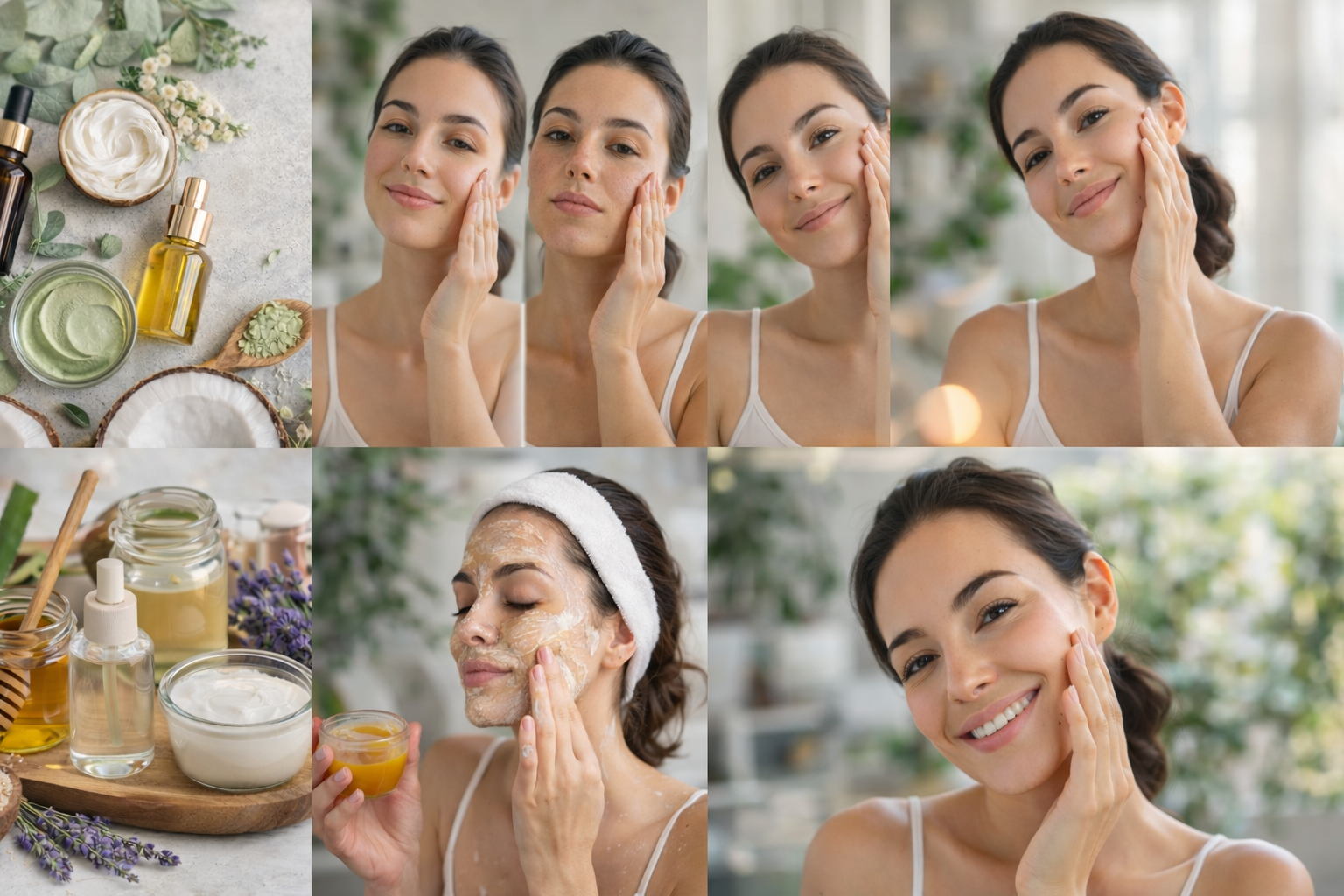
[Image Suggestion: A collection of organic skincare products, such as oils and creams, on a light, natural background with herbs]
Understanding Your Skin Type
The first step in creating a skincare routine is understanding your skin type. Different skin types have different needs, so it’s crucial to select products that are tailored to your skin’s unique characteristics.
Normal Skin
Normal skin is well-balanced and does not experience extreme dryness or oiliness. It has a smooth texture, even tone, and small pores.
Oily Skin
Oily skin produces excess sebum, leading to a shiny complexion. It is more prone to acne, blackheads, and clogged pores due to the excess oil.
Dry Skin
Dry skin can feel tight, flaky, and rough, often with visible fine lines. It lacks moisture and can become irritated easily, especially in harsh weather conditions.
Combination Skin
Combination skin has both oily and dry areas. Typically, the T-zone (forehead, nose, and chin) is oily, while the cheeks and other parts of the face may be dry or normal.
Sensitive Skin
Sensitive skin reacts easily to environmental factors, products, or allergens. It can become red, irritated, or inflamed after using certain skincare ingredients.
[Image Suggestion: A person applying skincare products, such as a serum or moisturizer, to their face, showcasing different skin types like dry, oily, and normal]
Best Natural Ingredients for Different Skin Types
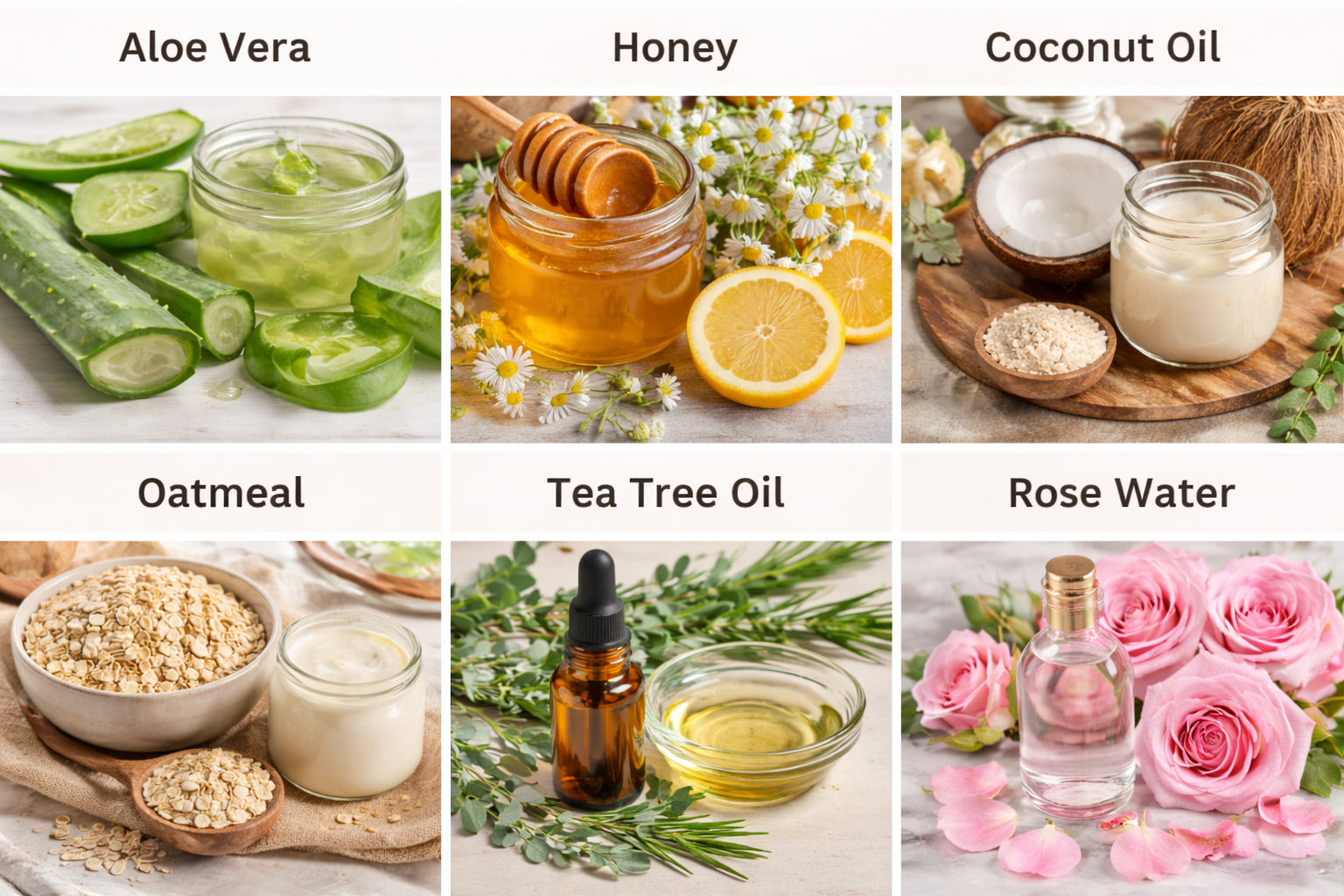
For Normal Skin:
- Aloe Vera: Soothes, treats, and adds moisture to the skin.
- Coconut Oil: Naturally moisturizing and gentle on the skin.
- Rose Water: Helps tone the skin and maintain its elasticity.
For Oily Skin:
- Tea Tree Oil: Known for its antibacterial properties, great for reducing acne and blackheads.
- Witch Hazel: A natural astringent that reduces oil and tightens pores.
- Clay Masks: Absorb excess oil and deeply cleanse pores.
For Dry Skin:
- Honey: A natural humectant that draws moisture to the skin.
- Shea Butter: Rich in fatty acids, deeply moisturizing and ideal for dry skin.
- Jojoba Oil: Hydrates the skin without making it greasy.
For Sensitive Skin:
- Chamomile: Soothes and calms the skin, perfect for sensitive types.
- Lavender Oil: Reduces irritation and promotes skin healing.
- Cucumber Extract: Hydrates and refreshes without causing irritation.
For Combination Skin:
- Argan Oil: Balances both dry and oily areas, perfect for the T-zone.
- Green Tea: Packed with antioxidants, it works well for all skin types.
- Vitamin C: Helps brighten and balance the skin.
[Image Suggestion: A variety of natural ingredients such as aloe vera, honey, coconut oil, and lavender arranged in jars]
How to Build Your Natural Skincare Routine
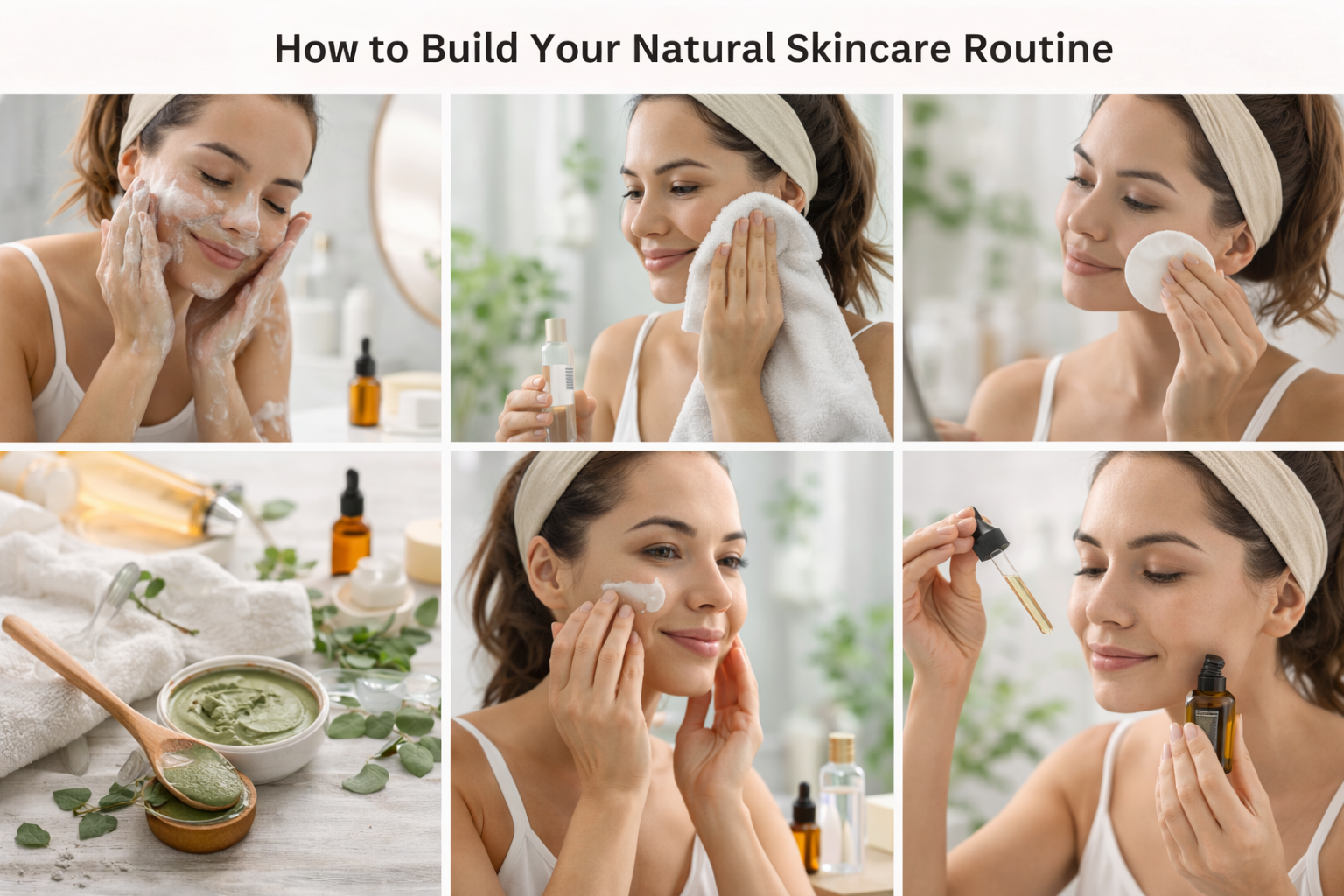
Creating a skincare routine that works for you starts with the basics. Here’s how to build your natural skincare regimen:
1. Cleanse
Begin your routine with a gentle, natural cleanser. Look for ingredients like aloe vera or rose water, which won’t strip your skin of its natural oils. A good cleanser should remove dirt, makeup, and impurities without causing dryness.
2. Exfoliate
Exfoliation is key to removing dead skin cells and allowing fresh skin to emerge. Use gentle exfoliants like sugar scrubs or coffee grounds, which provide physical exfoliation. For sensitive skin, consider an enzyme-based exfoliant.
3. Tone
After cleansing, apply a toner to restore the pH balance of your skin. Look for natural toners like witch hazel or rose water to refresh your skin without harsh chemicals.
4. Moisturize
Moisturizing is essential to keep your skin hydrated. Use a lightweight moisturizer for oily skin and a richer cream for dry skin. Shea butter and jojoba oil are great options for dry skin, while aloe vera gel works well for oily skin.
5. Protect
Always finish your routine with sunscreen to protect your skin from harmful UV rays. Choose a sunscreen that contains zinc oxide or titanium dioxide for broad-spectrum protection.
[Image Suggestion: A woman applying a facial serum or moisturizing cream, showing the skincare routine process]
DIY Natural Skincare Recipes
If you love DIY skincare, here are some simple, effective recipes you can try at home.
1. Soothing Oatmeal & Honey Face Mask
Ingredients:
- 2 tablespoons of ground oats
- 1 tablespoon of honey
Instructions:
Mix the ingredients into a smooth paste, apply to your face, and leave it on for 10-15 minutes before rinsing with warm water.
2. Chamomile Tea Face Steam
Ingredients:
- Chamomile tea bags
- Hot water
Instructions:
Boil water and add the chamomile tea bags. Place your face over the steam for 5-10 minutes to open up pores and relax your skin.
[Image Suggestion: A DIY scene of preparing an oatmeal and honey face mask with ingredients laid out on a table]
Eco-Friendly Practices in Natural Skincare
Sustainable practices are an essential part of natural skincare. Look for brands that prioritize eco-friendly packaging, cruelty-free testing, and sustainable sourcing of ingredients.
[Image Suggestion: Eco-friendly packaging with natural skincare products displayed in glass jars, showcasing sustainable packaging]
Common Skincare Mistakes to Avoid
-
Over-Exfoliating
Exfoliating is essential, but over-exfoliating can damage your skin’s natural barrier and lead to irritation. Stick to exfoliating 1-2 times per week.
-
Not Using Sunscreen
Even if you’re indoors, UVA rays can affect your skin. Make sure to apply sunscreen every day to prevent premature aging and skin damage.
-
Using Harsh Products
Avoid skincare products with excessive alcohol or synthetic fragrances, as they can strip your skin of its natural oils and cause irritation.
[Image Suggestion: A person with glowing skin after following a skincare routine, showcasing the importance of protection and hydration]
Conclusion: Embrace the Natural Beauty of Your Skin
Incorporating natural skincare into your routine offers many benefits, from nourishing ingredients to eco-conscious practices. By understanding your skin type and selecting the right natural products, you can achieve healthy, glowing skin while minimizing exposure to harmful chemicals. Start small, and gradually build a routine that works best for you. Looking for thoughtful gifts or unique items? Explore our collection at Gifttree. Whether you’re shopping for loved ones or treating yourself, we’ve got something for everyone!
GiftTree – Your One-Stop Shop for Special Moments.